Christmas in a Cup SVG
A Designer’s First Look: Warm, Whimsical, and Immediately Usable
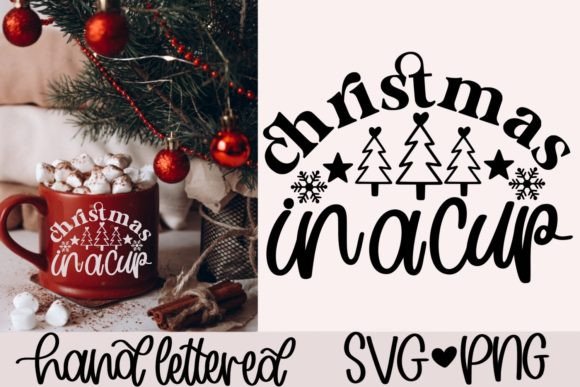
When I opened Christmas in a Cup SVG for the first time, I didn’t see just another holiday graphic—I saw a quiet moment of handmade charm. The hand-lettered script flows like steam rising from hot cocoa: relaxed but intentional, slightly uneven in the best possible way. It’s not overly ornate or stiff—it breathes. That matters. In embroidery, especially on apparel and soft goods, designs that feel human-made translate directly into customer trust. This isn’t mass-produced clip art; it’s crafted with rhythm and warmth, and that shows up in how it stitches.
Real Project Test: A Holiday Tote Bag for My Local Boutique
Last week, I prepped a small batch of embroidered canvas tote bags for a downtown gift shop’s holiday pop-up. I chose Christmas in a Cup SVG as the centerpiece—centered on the front panel, sized to 4.2 inches wide—and stitched it onto natural unbleached cotton canvas using medium-weight cutaway stabilizer and matte polyester thread. The result? Clean, legible lettering with gentle curve definition. No skipped stitches. No thread nesting at the base of the “C” in “Cup.” Customers paused mid-aisle—not because it was flashy, but because it felt *inviting*. That’s the power of thoughtful lettering in a machine embroidery design: it turns functional fabric into something people want to hold, gift, and keep.
Where It Shines (and Where It Asks for Extra Care)
Christmas in a Cup SVG works beautifully on stable, medium-weight fabrics: canvas totes, cotton tea towels, twill aprons, and fleece-lined sweatshirts. Its open letterforms and modest height (likely under 5 inches tall) make it forgiving on curved surfaces like caps—if hooped carefully and stabilized well. As a holiday embroidery motif, it lands perfectly between playful and polished: ideal for boutique branding, personalized gifts, or Etsy listings targeting cozy, modern shoppers.
That said, it demands attention in specific scenarios:
- Small hoop sizes: If your hoop is under 4x4 inches, confirm the design fits comfortably—including seam allowances and stabilizer margin. Tight cropping risks distortion.
- Thin or stretchy fabric: On lightweight tees or baby onesies, use tear-away + topping (like water-soluble film) to prevent thread sinking and letter collapse.
- Dark fabric: The hand-lettered style relies on contrast. Test stitch density and thread color—matte black on navy can read flat unless you add slight shadowing or adjust underlay.
- Dense fill areas: Though primarily script-based, any cup illustration (if included in the full file) may contain satin-stitched curves. Check for over-stitching in tight corners—especially where letters taper.
Design Integrity Meets Commercial Reality
As an embroidery designer who sells both finished products and digital embroidery files, I judge every asset by two standards: how it performs under needle, and how it positions my brand. Christmas in a Cup SVG strengthens both. Its uniqueness—“100 hand lettered”—isn’t marketing fluff. You can *see* the variation in stroke weight and spacing. That authenticity elevates a simple tote bag from craft fair staple to curated boutique product. It also builds buyer confidence: when customers recognize intentional craftsmanship, they’re more likely to pay a premium, leave a review, or return for your next seasonal drop.
For Etsy sellers and small shop owners, this design supports cohesive storytelling. Pair it with minimalist snowflake motifs or cinnamon stick line art—and suddenly you’ve got a full holiday collection, not just a single listing. And because it’s rooted in typography rather than complex illustration, it scales gracefully across product types: a subtle version on a linen pillow cover, a bolder iteration on a denim jacket back, even adapted as an embroidered patch for holiday aprons.
Practical Notes Every Embroiderer Should Run Through
Before stitching your first Christmas in a Cup SVG project, do these five things:
- Test on scrap fabric—same type, same stabilizer, same thread colors you’ll use for production.
- Check stitch density in the thinnest parts of the letters. Overly dense fills on delicate script can cause puckering; too-light underlay leads to poor coverage on textured fabric.
- Confirm hoop size compatibility. If you work mostly with 4x4 hoops, verify the design doesn’t require larger framing—or plan how to split it cleanly.
- Inspect small details in your embroidery software: are serifs or terminal flicks defined enough to survive stitching? Zoom in. Adjust if needed.
- Review licensing. Since the description says “100 hand lettered by me,” confirm whether commercial use is permitted for finished products or resale of digital files—especially important for craft business owners and digital product sellers.
Final Thought: Not Just a Graphic—A Mood You Can Stitch
In the Crafts and Graphics space, many holiday designs shout. Christmas in a Cup SVG whispers—and that’s its strength. It doesn’t need glitter or bells to signal the season. It uses warmth, rhythm, and restraint. That makes it unusually versatile: equally at home on a baby onesie (tiny, sweet, stitched in ecru), a rustic kitchen towel (bold, high-contrast, with visible stitch texture), or a limited-run sweatshirt for a local coffee roaster’s holiday collab.
If you’re choosing embroidery assets for real projects—not just mockups—this one earns its place in your library. It’s not flashy, but it’s reliable. Not complicated, but it carries weight. And in handmade product development, that balance is rare, valuable, and quietly professional.