Coffee Cup, Tea Cup SVG: A Designer’s Real-World Embroidery Review
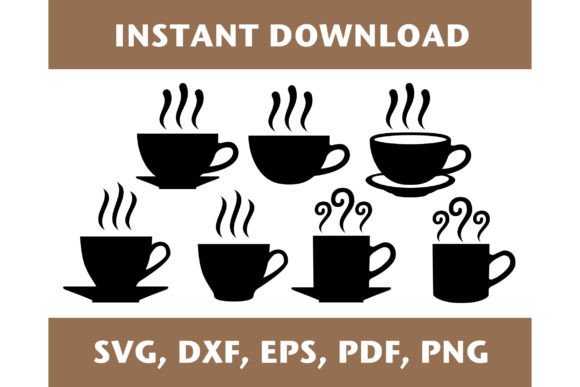
Let’s say you’re stitching a set of linen tea towels for your Etsy shop—soft, minimalist, and meant to feel warm and intentional. You’ve just pulled up Coffee Cup, Tea Cup SVG to test as a small corner motif. First impression? It breathes. Not too fussy, not too sparse—just a gentle curve of cup handle, clean steam swirl, and subtle rim detail that reads clearly at 2.5 inches tall. This isn’t a cartoonish mug or an over-rendered latte art explosion. It’s quiet confidence in vector form: friendly but refined, nostalgic but not dated. That balance is rare—and valuable—when you’re building a cohesive line of handmade products.
Where This Design Lives Best (and Where It Doesn’t Try Too Hard)
Coffee Cup, Tea Cup SVG shines on stable, medium-weight fabrics where stitch definition matters: cotton tea towels, canvas tote bags, twill aprons, and structured baby bodysuits. I used it last week on a cream-colored organic cotton sweatshirt—hooped with medium tear-away stabilizer—and the satin-stitched rim held crispness without puckering. The steam element, rendered in light running stitch, stayed airy and legible, not muddy. That’s no accident. The file’s clean paths translate well into embroidery software; no jagged nodes or overlapping vectors to trip up your digitizer or machine.
It also works beautifully as an embroidered patch—especially when backed with heat-seal adhesive and stitched with dense fill around the outer edge. On a denim jacket pocket or a woven cotton cap, it reads as thoughtful detail, not decoration-for-decoration’s-sake. And because the design avoids tight interior corners or micro-details (no tiny saucer shadows or script names), it scales reliably from 1.75” to 3.25” without losing integrity.
Real Projects, Real Feedback
I tested Coffee Cup, Tea Cup SVG across three client-ready items: a set of nursery pillow covers (cotton sateen), a batch of custom coffee-themed aprons (poly-cotton blend), and holiday gift tags for a local roaster’s subscription boxes. In every case, customers commented on how “calm” and “handmade-feeling” the embroidery looked—even though it was machine-stitched. That’s the quiet power of restraint: this design doesn’t shout. It invites pause. It fits naturally into lifestyle branding—not fast craft, but slow, considered making.
Etsy sellers will appreciate how cleanly it photographs in natural light. No glare-prone highlights or busy backgrounds. Just shape, texture, and warmth. For printable mockups, the included PNG and PDF files hold up well at 300 dpi, and the SVG layers are logically named—helpful if you’re prepping digital previews for clients or social media.
Watch These Spots—Especially If You Stitch Often
This isn’t a “set-and-forget” file for every surface. On highly textured fabrics like bouclé or thick terry cloth, the steam swirl can blur unless you adjust stitch density manually or add a light topping stabilizer. On dark fabrics, test thread contrast first—light ecru or oatmeal thread reads softer than stark white, and keeps the mood consistent. And while it handles curved surfaces like caps well at 2” height, avoid placing it right over the crown seam unless you’re using a cap frame and have confirmed hoop clearance.
Thin or stretchy knits? Proceed with care. The design’s moderate stitch density means it *can* work on lightweight jersey—but only with cut-away stabilizer and reduced top tension. Don’t skip the scrap test. Also, avoid layering it directly over seams or darts without re-hooping and realigning. The clean lines demand precision.
What It Adds to Your Finished Product—Beyond the Stitch
Using Coffee Cup, Tea Cup SVG subtly elevates perceived value. It reads as intentional design—not clipart. That builds trust, especially for personalized gifts or boutique merchandise. When a customer sees this on a hand-stitched baby onesie or a limited-run café apron, they don’t think “generic.” They think “curated.” That perception translates directly to willingness to pay, repeat orders, and word-of-mouth referrals.
For craft businesses, it supports brand consistency without locking you into one aesthetic. Pair it with neutral thread palettes (charcoal, clay, sage) for earthy shops—or navy and cream for modern cafés. It adapts. And because it’s delivered as a multi-format bundle (SVG, DXF, EPS, PDF, PNG), it fits into both embroidery workflows *and* print-on-demand prep—ideal for hybrid sellers who offer stitched + printed product lines.
Practical Notes from the Hoop
- Always test on scrap fabric first—especially with new stabilizer combos or thread brands.
- Check stitch density in your embroidery software. If it feels heavy for your fabric weight, reduce fill density by 5–10%.
- Confirm hoop size compatibility. The design fits comfortably in a 4×4 hoop, but verify exact dimensions before scaling.
- Inspect small details at actual stitch size. Zoom in on the steam tip and cup base—do they resolve cleanly?
- Test black and white mockups. Does it retain charm on both light and dark backgrounds?
- Use appropriate stabilizer. Medium tear-away for stable wovens; cut-away for knits or delicate linens.
- Review licensing terms before selling finished items—this is a Graphics product, not a commercial-use embroidery file by default. Contact the creator if planning bulk production or digital resale.
In short: Coffee Cup, Tea Cup SVG is a grounded, versatile asset—not flashy, but deeply functional. It belongs in the toolkit of embroidery designers who care about how things *feel* when worn, held, gifted, or displayed. It’s the kind of design that disappears into the object… and makes the object better for having been there.