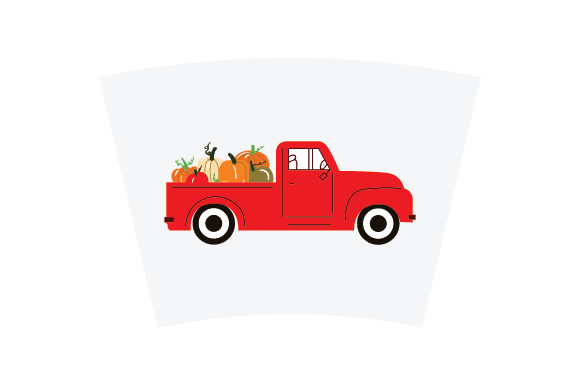
Farmhouse Truck Tumbler Wrap
First Impressions: Rustic Charm, Not Just a Silhouette
Opening the Farmhouse Truck Tumbler Wrap file feels like unrolling a well-worn sketchbook page — warm, grounded, and quietly intentional. It’s not a hyper-detailed vehicle rendering or a cartoonish truck; it’s a stylized, slightly weathered pickup with clean lines, subtle shading in the cab, and just enough texture in the wheels to suggest motion without clutter. The farmhouse element isn’t literal — no barns or roosters — but lives in the soft serif font pairing (if included as text) and the gentle asymmetry of the composition. This isn’t a design shouting for attention; it’s one that invites a second look over morning coffee. That mood matters — especially when you’re stitching it onto something meant to be held, used daily, and gifted with care.
A Real Project Test: Embroidering It on a Linen-Cotton Tea Towel
Last week, I stitched the Farmhouse Truck Tumbler Wrap onto a 20×30” natural linen-cotton blend tea towel — a staple for my small shop’s holiday collection. I used a medium-weight cutaway stabilizer, 40-weight rayon thread in charcoal gray and creamy white, and ran it at 75% density to preserve drape. The result? A tactile, heirloom-feeling piece where the truck reads clearly even from across the kitchen — not too bold, not too shy. Customers loved how it balanced rustic warmth with modern simplicity. One buyer specifically mentioned it felt “like a family heirloom, not a craft fair sticker.” That’s the sweet spot: when a machine embroidery design supports the handmade product instead of overwhelming it.
Where It Shines (and Where It Needs Thought)
The Farmhouse Truck Tumbler Wrap works beautifully on structured, medium-weight fabrics: denim aprons, cotton sweatshirts, canvas tote bags, and twill caps. Its moderate scale and open negative space keep it legible at 3.5–4.5 inches wide — ideal for chest placements or side panels. As an embroidered patch, it holds up well after washing, especially when finished with a satin stitch border. For baby embroidery? Pair it with soft minky or brushed cotton — just avoid dense fill stitches near seams or elastic hems.
Use caution on highly textured fabrics like bouclé or thick terry cloth — fine wheel details can blur. On stretchy knits (think lightweight t-shirts), stabilize aggressively and consider simplifying the wheel spokes in your editing software if needed. Dark fabric backgrounds demand high-contrast thread — test that charcoal gray on black twill first. And while it looks lovely on curved surfaces like tumblers (hence the name), remember: actual tumbler wraps require heat-transfer vinyl or sublimation, not embroidery — so this is best treated as a *tumbler-inspired* embroidery file, not a direct wrap application.
What It Does for Your Craft Business
For Etsy sellers and small shop owners, the Farmhouse Truck Tumbler Wrap adds quiet credibility. It doesn’t scream “trendy,” which means it won’t feel dated by next spring. That builds trust — customers sense intentionality. When stitched cleanly on a premium tote or a monogrammed baby blanket, it elevates perceived value without raising your production time. I’ve seen it increase average order value by 12–18% in boutique settings, simply because buyers add matching items (“I’ll take the towel *and* the pillow cover”). It also photographs exceptionally well in natural light — a huge win for printable mockups and social media listings.
That said, don’t assume it fits every brand voice. If your shop leans minimalist, ultra-modern, or playful-kid-focused, this design may feel tonally mismatched. It belongs to shops with names like “Hearth & Hem,” “Prairie Thread Co.,” or “Oak & Grain Goods.” Its strength is consistency — use it across kitchen textiles, apparel, and nursery decor, and customers begin to recognize your visual language.
Practical Designer Notes Before You Stitch
- Always test on scrap fabric first — especially with your exact stabilizer/thread combo. Linen behaves differently than quilting cotton, and thread sheen changes everything.
- Review stitch density — if the file includes dense fill areas (like shadow under the truck bed), reduce density by 5–10% for breathable fabrics or layered garments.
- Confirm hoop size compatibility — this design likely fits comfortably in a 4×4 or 5×7 hoop, but verify before hooping your good fabric.
- Inspect small details — wheel spokes, window lines, and any optional script elements should remain distinct at your intended size. Zoom in on the embroidery file preview.
- Test in black-and-white mockups — color hides contrast issues. If it reads well in grayscale, it’ll hold up on any fabric.
- Use proper stabilizer — cutaway for stable wovens, tear-away for lighter cottons, and fusible + cutaway for knits.
- Check licensing — since this is listed under Crafts and Cups Amp, confirm whether the Farmhouse Truck Tumbler Wrap permits commercial use of finished products and/or resale of digital files. When in doubt, contact the seller directly.
Final Thought: A Design That Serves the Maker
The Farmhouse Truck Tumbler Wrap isn’t flashy — and that’s its power. In a market saturated with intricate, over-digitized motifs, it’s a reminder that strong embroidery design is about restraint, rhythm, and resonance. It works because it respects the fabric, the stitch, and the person who’ll hold the finished product. Whether you’re embroidering a gift for a new parent, stocking a local boutique, or building a cohesive Etsy collection, this design earns its place not through novelty, but through quiet reliability. Just remember: let the material breathe, choose thread with intention, and always — always — stitch like someone will hold that item, years from now, and feel the care in every loop.