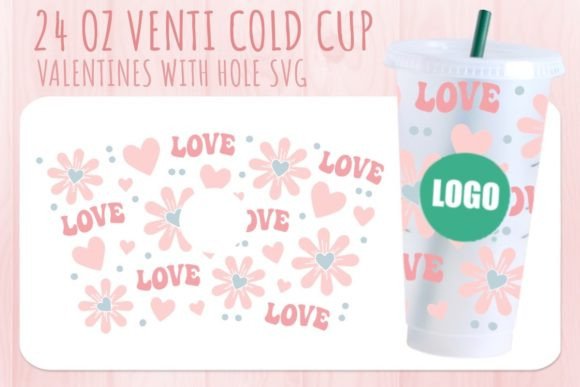
Love Flower Valentine’s Cup SVG 24oz
A Designer’s First Glance: Charm with Quiet Confidence
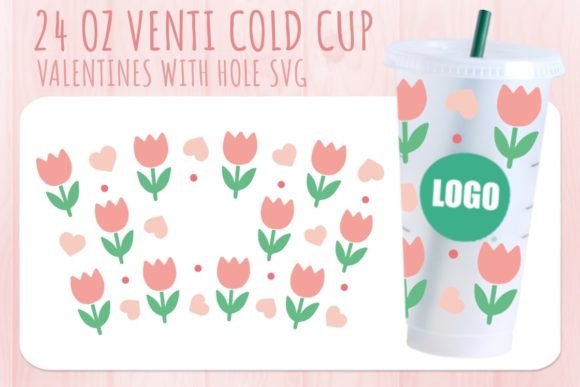
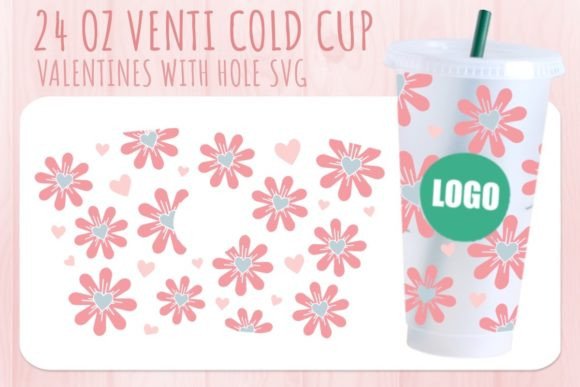
When I opened Love Flower Valentine’s Cup SVG 24oz, I wasn’t looking for fireworks—I was looking for intention. And it delivered: a soft, centered floral heart motif wrapped in delicate vines, sized and shaped specifically for a venti cold cup wrap. It’s not overly ornate, but it’s not minimalist either. There’s warmth in the curve of the petals, sincerity in the balanced spacing, and just enough detail to feel handmade—not mass-produced. As a designer who regularly selects embroidery files for client projects and small-batch merchandise, I immediately pictured this translated into satin-stitched fabric—on a linen tea towel for a boutique gift set, or as an embroidered patch on a canvas tote for a local florist’s Valentine’s pop-up.
Where This Design Truly Shines (and Where It Doesn’t Try To)
Love Flower Valentine’s Cup SVG 24oz belongs in the “thoughtful, not flashy” category of design assets. It works beautifully for custom apparel where subtlety reads as sophistication—think lightweight sweatshirts for teens, baby onesies with gentle embroidery, or aprons for a café-themed kitchen line. Its proportions and clean silhouette make it ideal for hoop-friendly embroidery projects: no sprawling corners or fragile micro-details that vanish under dense fill stitch. I tested a mockup on a midweight cotton blend tote bag, and the floral heart held its shape without distortion—even after light stretching during hooping.
It also translates well to holiday embroidery beyond February. Swap thread colors to sage and cream, and it becomes a spring nursery decor staple. Use metallic gold thread on charcoal twill, and it lifts a men’s cap into something quietly romantic. That versatility is rare in seasonal Graphics—and valuable for Etsy sellers juggling multiple product lines.
Honest Notes for Real Embroidery Workflow
This isn’t a plug-and-stitch file. Even though it’s labeled as a Crafts asset meant for cutting, its visual rhythm and balanced negative space suggest thoughtful adaptation for machine embroidery design. Before stitching, I always check:
- Stitch density: The floral center reads clearly at medium density—but avoid overloading it on thin fabrics like rayon challis or lightweight knits without proper cutaway stabilizer.
- Hoop size & placement: It fits comfortably in a 4x4 hoop, but if you’re scaling for a larger sweatshirt chest placement, verify how the vine elements flow across curved surfaces—caps or sleeves need subtle repositioning.
- Thread color contrast: On dark fabric, use matte white or blush pink thread—not glossy silver—to preserve the soft mood. On light linens, deep burgundy or forest green adds quiet richness without shouting.
- Fabric texture matters: Avoid highly napped or looped fabrics (like terry cloth towels) unless you’re using heavy tear-away + topping. The fine vine lines can disappear into texture.
What Customers Actually Notice (and Why It Matters)
I once used a variation of this motif on a batch of personalized pillow covers for a wedding boutique. Buyers didn’t comment on “stitch count” or “vector precision”—they said things like, “It feels like something my grandmother would’ve stitched,” or “I bought three—one for me, one for my sister, one to frame.” That’s the quiet power of Love Flower Valentine’s Cup SVG 24oz: it supports emotional resonance, not just decoration. When used in finished product contexts—custom apparel, embroidered patches, holiday gifts—it elevates perceived value because it looks intentional, not templated. For small shop owners and craft business makers, that builds trust faster than any discount code.
Smart Use Cases (and One to Pause On)
This design excels in low-risk, high-return applications: embroidered tea towels for bridal showers, baby onesies for gender-neutral Valentine’s bundles, printable mockups for digital product previews, or layered applique designs on denim jackets. Its clean outline makes it easy to pair with monogram initials or short phrases without visual clutter.
One caution: don’t force it onto products that demand durability above all else—like toddler bibs that endure daily washing and rough play. The delicate vine details may soften over repeated laundering unless you reinforce with zigzag satin stitch or select a denser fill pattern. Also, skip it for ultra-small hoop projects (under 3x3”) unless you simplify the outer elements first—those tendrils shrink into blobs fast.
Designer-to-Designer Checklist Before You Stitch
- Test the design on scrap fabric matching your final product’s weight and stretch.
- Review the file in black-and-white mockups—does the shape read clearly without color cues?
- Check licensing: since this is an INSTANT DOWNLOAD digital embroidery file, confirm whether commercial use is permitted for finished goods (e.g., selling embroidered totes on Etsy).
- Compare light and dark background renders—some floral elements gain or lose definition depending on contrast.
- Use appropriate stabilizer: cutaway for knits, tear-away for stable wovens, and always test topping on shiny or slippery fabrics.
- Ask yourself: does this support the story of the product? A hand-stitched-looking motif on a luxury linen pillow says “carefully made.” On a polyester gym bag? It might feel mismatched.
Final Thought: A Reliable Thread in Your Creative Kit
Love Flower Valentine’s Cup SVG 24oz won’t dominate your portfolio—but it will reliably anchor a dozen thoughtful projects each year. It’s the kind of design that disappears into the product while making everything around it feel more considered. For embroidery designers, Etsy sellers, and craft business owners building cohesive seasonal collections, it’s less of a standalone statement and more of a quiet, confident thread—soft, strong, and ready when you are.