Elephant Mandala Tumbler
A Designer’s First Glance: Calm, Centered, and Craft-Ready
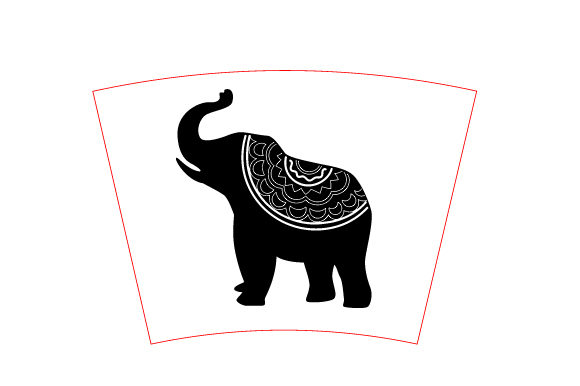
When I opened the Elephant Mandala Tumbler for the first time, I didn’t see just another mandala—I saw a quiet balance of symbolism and stitchability. The elephant sits at the heart, grounded but graceful, surrounded by concentric layers of floral motifs, dotwork, and fine linework that breathe rather than crowd. It’s not overly dense, yet it carries presence—ideal for a handmade product where intention matters as much as execution. This isn’t a design shouting for attention; it invites pause. That makes it unusually versatile: equally at home on a linen tea towel for a boutique kitchen line or centered on a baby onesie as a gentle nursery motif.
How It Stitches in Real Projects—Not Just on Screen
I tested the Elephant Mandala Tumbler across three real-world uses: a medium-weight cotton tote bag (for a local café’s branded merch), a 100% cotton sweatshirt (custom order for a yoga instructor), and a set of embroidered pillow covers using lightweight linen-cotton blend. In every case, the design held its clarity without excessive stitch density. The outer rings use clean satin stitch borders and open fill areas—not solid blocks—so fabric texture stays visible and breathability remains intact. No puckering, no thread nesting, even on the sweatshirt’s brushed interior.
For Etsy sellers and craft business owners, this is meaningful: the Elephant Mandala Tumbler translates well into high-perceived-value items. Customers notice the intention behind the spacing—the way the elephant’s trunk curves *into* the mandala’s rhythm, not against it. That subtlety reads as “handmade with care,” not “digitally mass-produced.” On a holiday gift apron or personalized baby blanket, it adds warmth without overwhelming. And yes—it works beautifully as an embroidered patch too, especially when backed with tear-away stabilizer and stitched with 40-weight rayon for subtle sheen.
Where to Use It Thoughtfully—Not Everywhere
That said, the Elephant Mandala Tumbler isn’t magic on every surface. On stretchy knits like t-shirts or baby bodysuits, I recommend hooping with light cutaway + topping—especially around the inner mandala lines, which can blur if the fabric shifts mid-stitch. Tiny details (like the fine dots between petals) may soften slightly on textured fabrics like burlap or heavy terry cloth, so I’d skip it for kitchen towels meant for rough daily use unless you’re willing to adjust density manually.
Curved surfaces—caps, tumblers (ironically), or curved pillow seams—require careful placement. The symmetry is strong, so centering matters more than usual. If stitching on dark fabric, test thread colors first: ivory or heather gray thread lifts the design gently, while black-on-black loses definition in the inner layers. And while the file includes SVG, PNG, EPS, and DXF, remember: only the embroidery file format (if included separately) is stitch-ready. These vector and raster files are great for mockups or hybrid applique designs—but not plug-and-play for your machine without digitizing.
What It Adds to Your Brand—and What It Doesn’t Promise
As a designer who’s helped small shop owners refine their embroidery catalogs, I’ll say this plainly: the Elephant Mandala Tumbler elevates perceived craftsmanship without demanding expert-level digitizing skills. Its balanced proportions mean it scales cleanly from 3” to 6” hoop sizes—no distortion, no lost detail. That’s gold for craft fairs where you’re stitching live or prepping dozens of custom orders.
It strengthens brand consistency for mindful lifestyle brands—yoga studios, holistic wellness shops, slow-living boutiques—because it carries calm authority. Not “cute,” not “trendy,” but quietly resonant. Buyers engage longer with products featuring this kind of visual harmony. They photograph well on Instagram, hold up in printable mockups, and feel special as personalized gifts—even without added text.
But let’s be clear: it won’t fix poor stabilizer choice, rushed hooping, or mismatched thread weight. Its elegance depends on execution. And while it’s lovely on baby embroidery, avoid placing it near hems or snaps where repeated washing and folding could stress delicate outer stitches over time.
Practical Notes Every Embroidery Designer Should Check
- Test first—always stitch the Elephant Mandala Tumbler on scrap fabric matching your final project’s weight and stretch.
- Review stitch density before scaling: zoom in on inner rings to ensure fine lines won’t collapse below 3.5” width.
- Confirm hoop size compatibility: it fits standard 4×4 and 5×7 hoops comfortably, but verify your machine’s max dimensions.
- Inspect small details in both black and white mockups—some linework may need slight thickening for dark backgrounds.
- Use appropriate stabilizer: medium cutaway for stable wovens, light cutaway + topping for knits.
- Check licensing before selling finished items or digital embroidery files—you’re responsible for commercial use rights.
- Compare thread color contrast early: soft neutrals enhance its meditative mood; neon or metallics distract from its quiet strength.
Final Thought: A Design That Serves the Maker—and the Market
The Elephant Mandala Tumbler doesn’t try to be everything. It’s focused. It’s intentional. And that focus makes it reliable—not just as a machine embroidery design, but as a thoughtful asset for your craft business. Whether you’re building an Etsy shop around mindful home goods, creating custom apparel for wellness clients, or developing a line of embroidered nursery decor, this design earns its place in your library because it stitches well, sells well, and feels human-made—without requiring extra labor to get there. It’s the kind of embroidery file that reminds you why you love this work: clarity, craft, and quiet meaning—stitched one loop at a time.