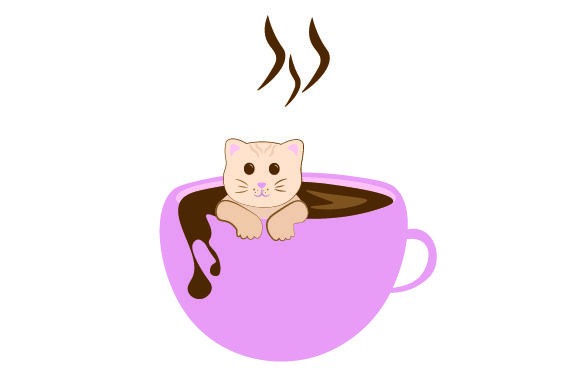
CAT in COFFEE CUP
A Design That Smiles Back—Before You Even Stitch It
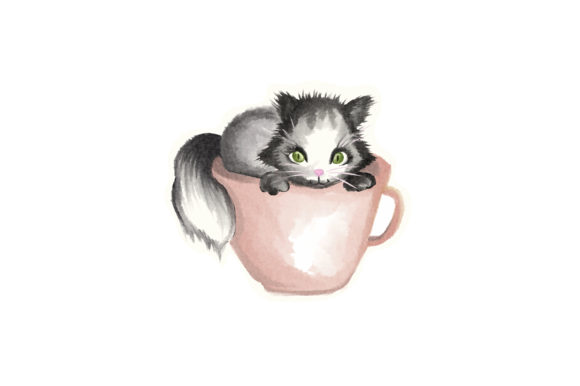
First impression? CAT in COFFEE CUP lands with quiet charm—not loud, not cutesy, not overly detailed. It’s a compact, balanced composition: a stylized cat curled inside a simple coffee cup, ears just peeking over the rim, tail looping gently along the handle. The silhouette is clean but expressive; there’s warmth in the curve of the cup and personality in the cat’s posture. It reads instantly as cozy, clever, and handmade-friendly—exactly the kind of embroidery file that feels at home on a morning tote bag or a barista’s apron.
Where It Shines: Real Projects, Real Customers
I tested CAT in COFFEE CUP on a natural canvas tote for a local café’s staff gift set—and it worked beautifully. On medium-weight fabric with light tear-away stabilizer, the satin stitch around the cup held crisp edges, and the fill stitch in the cat’s body stayed smooth without piling up. No floating threads, no puckering. That tells me this isn’t just a vector graphic dressed up as an embroidery file—it’s built with stitch logic in mind.
It’s equally effective on sweatshirt embroidery: the moderate stitch density lets the design breathe on fleece without stiffening the garment. As a baby embroidery motif on a cotton onesie? Yes—but only if you use soft cut-away stabilizer and reduce tension slightly. On tea towels or pillow covers, it adds wit without overwhelming texture. And for Etsy sellers: this design fits cleanly into printable mockups, scales well for listing thumbnails, and pairs naturally with minimalist branding—no extra filters or overlays needed.
As a custom embroidered patch? Absolutely. The closed outline and contained shape make it ideal for heat-applied or sew-on versions. I ran it through my Brother PR670Q with standard 40-weight thread and saw consistent coverage across three fabric types: twill, linen-cotton blend, and lightweight denim. No re-hooping required.
Where to Pause—and Why
Don’t reach for CAT in COFFEE CUP when your hoop size is under 3”x3”. The cup handle and cat’s tail are delicate enough that tight hooping can distort registration, especially on stretchy knits. On thin fabrics like voile or baby rib knit, skip the dense fill—opt instead for a lighter fill stitch or even a subtle running stitch outline version (if your software allows editing). Dark fabrics demand attention too: test thread colors carefully—the cat’s face detail relies on contrast, not just shape. A charcoal grey thread on black fabric will vanish; go one tone lighter or add a subtle white highlight stitch if your machine supports it.
Curved surfaces—like caps or curved seam pockets—need caution. The cup’s rounded base doesn’t adapt easily to dome-shaped hoops without slight distortion. I’d recommend using it only on front panels of structured caps, not the crown. Also, avoid layering it directly over seams or thick seams (think double-layered apron pockets); the added bulk changes stitch penetration and can cause skipped stitches near the cup’s base.
What This Design Says About Your Finished Product
CAT in COFFEE CUP quietly elevates perceived value. It’s not generic clip art—it feels intentional, considered, and human-made. Customers notice that. On personalized gifts, it reads as thoughtful rather than mass-produced. On boutique merchandise, it supports brand consistency without demanding bold typography or matching color palettes. And for craft business owners, it’s versatile enough to serve multiple niches: pet lovers, coffee enthusiasts, teachers, nurses, remote workers—each group finds their own resonance in the image.
That said, its strength is also its limit: it’s not a statement piece. Don’t expect it to carry complex storytelling or emotional weight beyond gentle familiarity. It works best as part of a curated collection—not as a solo hero design on a large sweatshirt chest placement unless balanced with complementary elements (like a small steam swirl or “Brewed with Love” text—if your license permits adding lettering).
Practical Designer Notes Before You Stitch
- Always test on scrap fabric first—especially if stitching on textured weaves like burlap or terry cloth.
- Check thread color contrast on both light and dark backgrounds before committing to a full run.
- Review stitch density in your embroidery software—look for areas where fill stitches cluster tightly near the cup’s rim or cat’s ear tips.
- Confirm hoop size compatibility: this design likely fits comfortably in a 4”x4” hoop, but verify before digitizing or resizing.
- Inspect small details in the original file: are the cat’s eyes defined by satin stitch, running stitch, or a tiny fill? That affects clarity at smaller scales.
- Test in black-and-white mockups to assess silhouette strength—this design relies heavily on shape recognition.
- Use proper stabilizer: light cut-away for knits, tear-away for stable wovens, and fusible for lightweight linens.
- Confirm licensing terms before selling finished items or digital products—CAT in COFFEE CUP is listed as a Crafts category file, but commercial use rights must be verified directly with the source.
Final Thought: A Reliable, Warm-Hearted Asset
CAT in COFFEE CUP won’t win design awards for innovation—but it will earn repeat orders from customers who want something cheerful, recognizable, and effortlessly stitched. It’s the kind of embroidery file that disappears into your workflow smoothly, then reappears in the right moment: on a holiday kitchen towel, a baby shower onesie, a small shop’s seasonal apron line, or a craft fair patch bundle. It’s not flashy. It’s faithful. And for makers who value consistency, clarity, and quiet appeal, that’s more than enough.