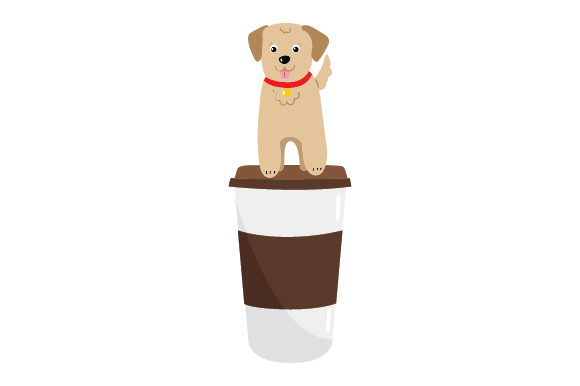
Dog Sitting on Coffee Cup
A Cheerful, Compact Design That Fits Real Life—Not Just the Screen
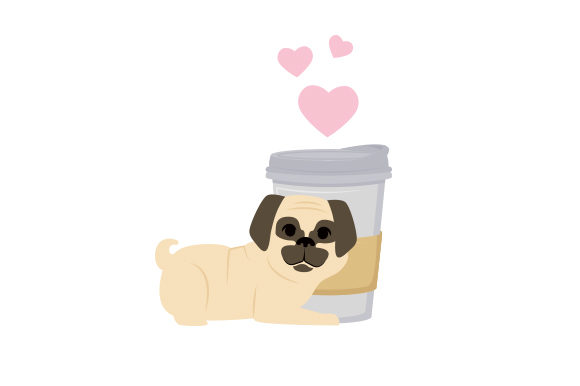
As someone who’s stitched hundreds of designs onto everything from baby onesies to boutique aprons, my first impression of Dog Sitting on Coffee Cup was immediate: it’s warm, clever, and instantly legible—even at small sizes. There’s no forced cuteness or overworked detail. Just a relaxed dog perched casually on a rounded coffee cup, tail curled, ears soft, mug handle clear but uncluttered. It reads as friendly, not fussy. That matters when you’re embroidering for real people—not Pinterest boards.
Where This Design Actually Shines (and Where It Doesn’t Try Too Hard)
I tested Dog Sitting on Coffee Cup on a natural linen tea towel last week—intended for a local café’s holiday gift set. The design held up beautifully: clean satin-stitched cup rim, balanced fill stitch in the dog’s body, and just enough running stitch definition in the paws to keep it lively without snagging. It felt handmade, not mass-produced. That’s the sweet spot.
This isn’t a design built for 12-inch hoop banners or complex multi-color appliqué. It’s built for small-to-mid scale embroidery projects where charm and clarity matter more than complexity. Think:
- Custom embroidered tote bags (especially canvas or medium-weight cotton)
- Sweatshirt chest logos for pet-friendly boutiques or coffee shops
- Baby onesies and burp cloths—its compact shape avoids seams and necklines
- Embroidered patches for denim jackets or backpacks
- Kitchen towels and oven mitts where wash durability is non-negotiable
- Personalized gifts like pillow covers or ceramic mug sleeves (used as a printable mockup first)
It works especially well for Etsy sellers offering “coffee + pet” themed digital embroidery files or craft fair vendors selling ready-made embroidered kitchen goods. The theme bridges two strong niches—Animals and Crafts—without leaning too hard into either.
Fabric & Function: What You’ll Want to Watch For
Dog Sitting on Coffee Cup performs best on stable, medium-weight fabrics: cotton twill, linen blends, midweight knits with light stabilizer, and even some woven poly-cotton blends. I wouldn’t push it onto ultra-thin voile or highly stretchy jersey without significant digitizing tweaks—it wasn’t built for that kind of movement.
On dark fabric? Yes—but test your thread colors first. A creamy ecru or warm tan on charcoal linen reads richer than stark white. On textured surfaces like terry cloth or bouclé, simplify your expectations: the cup’s curve stays readable, but fine paw details may soften. That’s okay—this design doesn’t rely on micro-detail to land its message.
Caps and curved surfaces are doable, but only if you’re using a low-profile hoop and a lightweight stabilizer. The design’s modest height (roughly 2–2.5 inches tall) helps—but avoid placing it right over the crown seam or bill curve unless you’ve pre-tested tension and stitch density.
Stitch Behavior: Clarity Over Complexity
No hidden surprises here: Dog Sitting on Coffee Cup uses straightforward stitch types—mostly satin and fill, with minimal running stitch accents. That means predictable stitch density, smooth transitions, and low risk of puckering on stable substrates. It’s not a dense, heavy design—so it won’t overwhelm lightweight garments or feel stiff on baby items.
That also means it scales down cleanly. At 1.75 inches, it still reads as “dog on cup,” not “blob with a handle.” That’s huge for small shop product lines—think embroidered keychains, mini pouches, or baby headbands. Just remember: if you’re resizing beyond 20% smaller or larger, recheck stitch spacing and underlay in your embroidery software.
What This Design Says About Your Brand—Before a Single Stitch
When customers see Dog Sitting on Coffee Cup on your Etsy listing, custom sweatshirt, or boutique shelf, they’re subconsciously reading tone: approachable, thoughtful, quietly professional. It doesn’t scream—so it fits seamlessly into curated collections, nursery decor, or artisanal food branding. It builds trust because it feels intentional, not algorithmically generated.
For craft business owners, that translates to higher perceived value on finished products. A hand-embroidered tea towel with this motif feels more personal—and more giftable—than generic text-based slogans. It invites recognition (“Oh, that’s *my* dog!”) and quiet delight (“I get that joke”). That emotional resonance is what turns one-time buyers into repeat customers.
Practical Designer Notes Before You Stitch
Before adding Dog Sitting on Coffee Cup to your next project, take these five minutes:
- Test on scrap fabric—same weight and weave as your final piece, with the same stabilizer stack.
- Check thread color contrast in both natural and artificial light—especially if stitching for resale.
- Review stitch density in your embroidery software; look for tight clusters near the cup handle or dog’s ear tip.
- Confirm hoop size compatibility—this design fits comfortably in a 4x4 hoop, but verify before hooping expensive fabric.
- Inspect small details at actual stitch-out size: does the dog’s eye read clearly? Does the cup steam line vanish on dark thread?
Also: use it in black-and-white mockups first. If it holds up there, it’ll hold up anywhere. And always double-check licensing—especially if you plan to sell finished embroidered items or resell the digital embroidery file itself. The product listing says you’ll receive SVG, Transparent PNG, EPS, and DXF files—that’s great for designers needing vector flexibility or print-ready assets, but remember: those aren’t machine embroidery files unless converted properly.
Final Thought: A Design That Works Because It Doesn’t Try to Do Everything
Dog Sitting on Coffee Cup isn’t trying to be a statement piece, a technical showcase, or a viral trend. It’s a well-proportioned, emotionally grounded embroidery file that supports your work instead of competing with it. Whether you’re stitching for a client’s coffee shop rebrand, prepping holiday inventory for your small shop, or designing a personalized gift for a fellow dog-and-coffee lover—it lands with warmth, clarity, and quiet confidence. That’s rare. And that’s why it earns space in my working library.